If you’re a Maine student who earned (or will earn) a high school diploma or equivalent in 2022, 2023, 2024 or 2025, you can attend Maine community college tuition free, but you’ll need to file the FAFSA first.
An interactive program that encourages high school students to explore the return on investment of various career pathways and financial decision-making.
The Finance Authority of Maine (FAME) recently approved a $500,000 direct loan to Forefront Brick South, LLC to help finance property improvements and working capital related to the redevelopment of a vacant building into an events center at Thompson’s Point in Portland.
Forefront Brick South, LLC plans to develop and eventually operate a 35,000 square foot events center at Thompson’s Point. The events center is part of a comprehensive $120 million mixed-use development project on the thirty-acre waterfront site. This particular project, which helps to rejuvenate a former railyard, is expected to create ten jobs. FAME partnered with Portland Development Corporation on the financing for this project.
“FAME is pleased to support this exciting and worthwhile development,” stated FAME Chief Executive Officer Bruce Wagner. “We are happy to help finance this development at Thompson’s Point and the creation of an events center with good-paying Maine jobs.”
“We are grateful for FAME’s assistance on this important project,” said Christopher Thompson, principal with Forefront Partners I, LP. “This financing will allow us to proceed with renovation of the Brick South historic rail building into a multi-use event center, which will showcase the building’s historic character and provide much-needed event space for a variety of event types, from weddings and trade shows to corporate events, arts events and performances, and more. It will offer a custom-created catering kitchen, bar, breakout rooms and support space, and will provide the type of venue that is much-needed in the Portland market.”
Inaugural Poet Richard Blanco Speaks to Crowd of 300
The Finance Authority of Maine (FAME) celebrated another year of successful business and educational partnerships at its annual meeting and awards event, Showcase Maine, on Thursday, November 17, 2016, at Portland’s Holiday Inn By The Bay.
Showcase Maine is FAME’s annual celebration of its successful partnerships with Maine’s business, lending, and higher education communities. The evening featured a reception, including a showcase of exhibits by Maine businesses and educational organizations that partner with FAME; a dinner and awards presentation; and a keynote speech by award-winning poet and part-time Maine resident Richard Blanco.
Blanco was the fifth inaugural poet in U.S. history—the youngest, first Latino, immigrant, and gay person to serve in such a role. Born in Madrid to Cuban-exiled parents and raised in Miami, he is the author of three poetry collections and two memoirs: The Prince of Los Cocuyos: A Miami Childhood and For All of Us, One Today: An Inaugural Poet’s Journey. Blanco divides his time between Bethel, Maine and Concord, Massachusetts.
“FAME always enjoys celebrating the successes of the past year with our partners in Maine’s business and higher education communities,” said Ray Nowak, FAME Board Chair. “We were pleased to showcase some of Maine’s business and educational success stories, and to honor our partners who help to make bright Maine’s economic and educational future.”
This year’s award recipients included:
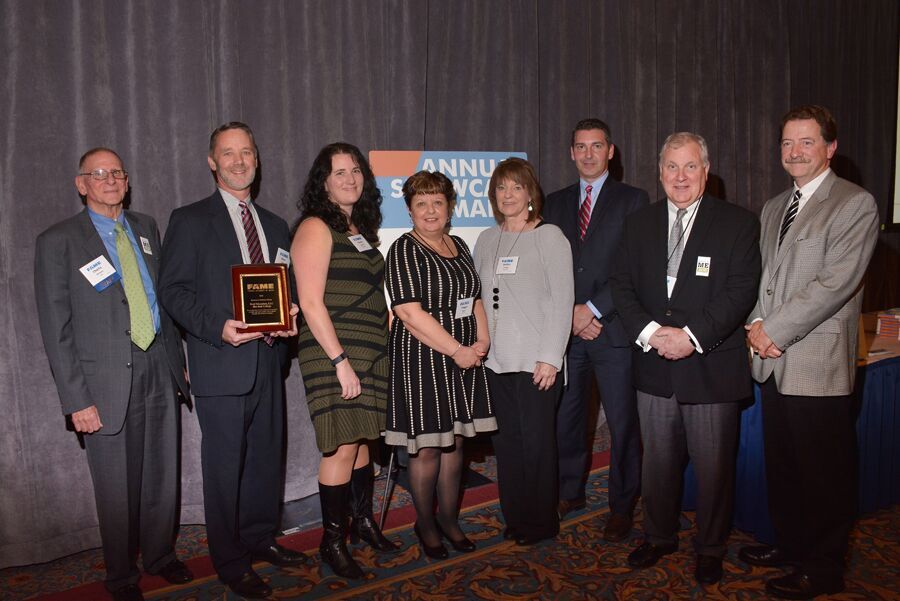
Beal Education, LLC, d/b/a Beal College (Business at Work for Maine Award): Founded in 1891 as the Bangor Business College, Beal College is a licensed and accredited career college located in Bangor. It offers a unique year-round school year with six individual terms. The majority of students are enrolled in medical/health care, criminal justice, business and welding associate degree programs. FAME partnered with Bangor Savings Bank to support the acquisition of the college by Sheryl DeWalt, who has expanded the college’s offerings and enrollment.
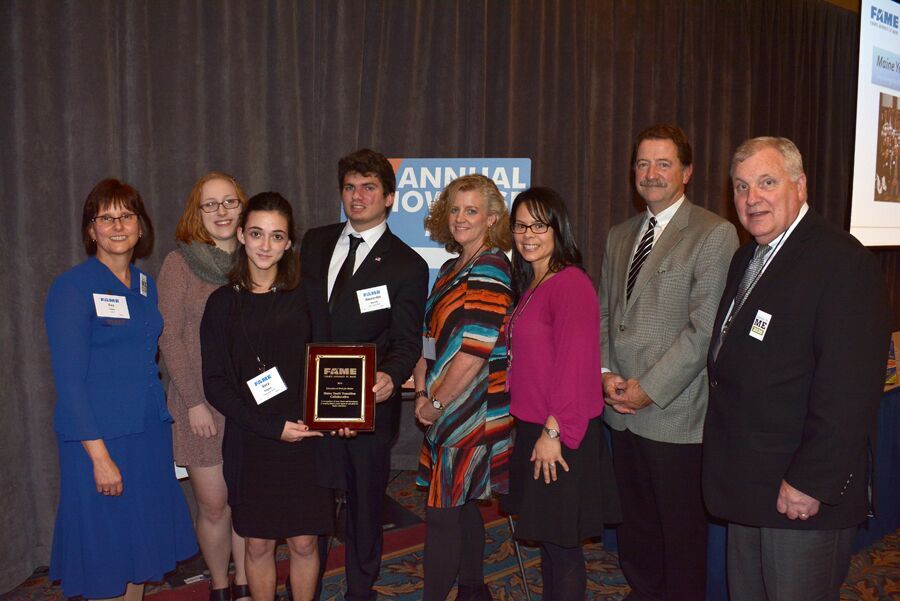
Maine Youth Transition Collaborative (Education at Work for Maine Award): Maine Youth Transition Collaborative is comprised of public and private partners from across the state. It works with young people, the state, and community members to ensure that youth transitioning from the foster care system to adulthood have the resources and personal connections they need to be successful. FAME honored the organization’s work on issues vital to a young person’s economic self-sufficiency, such as postsecondary education and employment.
Camden National Bank (Lender at Work for Maine Award—over $1.5 billion in assets): Over the past year, Camden National Bank partnered with FAME on 70 loans totaling over $27 million. This in turn helped to create 191 Maine jobs and retain an additional 1,034 jobs. In addition to being a top partner in bringing business to FAME, Camden National has grown remarkably in recent years and is actively committed to the communities in which it operates.
Machias Savings Bank (Lender at Work for Maine Award-under $1.5 billion in assets): Machias Savings Bank was recognized in the category for lenders with less than $1.5 billion in assets. This past year, FAME partnered with Machias Savings on 46 loans to Maine companies totaling over $6 million. This helped to create 73 Maine jobs and retain an additional 209 jobs. Machias Savings is actively committed to the communities in which it operates.
Prior to the dinner and awards ceremony, the FAME Board met for its monthly meeting and elected officers for the 2017 year. Raymond Nowak of Brunswick was re-elected to serve as chair; James Violette, Jr. of Waterville was re-elected as vice-chair; and Richard Roderick of Cape Elizabeth was elected as treasurer.
Award-winning poet and part-time Maine resident Richard Blanco received a standing ovation for his keynote presentation.Business at Work for Maine awardee Beal Education, LLC, d/b/a Beal College. From left to right: Charlie Emmons, FAME Senior Commercial Loan Officer; Steve Villett, Beal’s Chief Operating Officer; Renee Dunton, Director of Finance at Beal; Maggie Magee, Director of Financial Aid at Beal; Debbie Crockett, Director of Education at Beal; Ron Roope, Senior Vice President at Bangor Savings Bank; Bruce Wagner, FAME CEO; and Ray Nowak, FAME Board Chair.Education at Work for Maine awardee Maine Youth Transition Collaborative. From left to right: Eva Giles, FAME College Savings Program Manager; five representatives of MYTC: Faith Mishkin, Kera Pingree, Alexander Buzzell, Monica Williams, and Ahmen Cabral; Ray Nowak, FAME Board Chair; and Bruce Wagner, FAME CEO.
Improved Commercial Loan Insurance Programs Make It Easier and Faster to Do Business in Maine
The Finance Authority of Maine (FAME) is pleased to announce new and improved commercial financing options and fees. The changes result from input by FAME’s lending partners and the agency’s desire to better serve its customers. The changes take effect today.
Last year, FAME embarked on a collaborative process with its lender partners to discover what programs and enhancements would help them better serve their customers, Maine businesses. The results of that work are three new enhancements to FAME’s loan insurance programs that help lenders obtain loan insurance decisions faster, more easily, and most often at a lower cost.
Beginning November 1, 2016, FAME lender customers can opt to use:
NEW 3- and 5-year fee options for term loan insurance;
New 3-year fee option for line of credit loan insurance;
Leveraged insurance in the OnLine Answer (OLA) application process.
“FAME listened and responded to what our lending partners had to say regarding how we might improve our loan insurance offerings,” stated Bruce Wagner, FAME Chief Executive Officer. “We are pleased to announce these changes, which should help our lending partners obtain financing from us faster, more easily, and most often at a lower cost.”
Commercial Loan Insurance Now Available in One, Three and Five Year Fee Options
A lender now can choose the amount of time they want to insure a loan, and pay FAME fees once, up-front for these multiple year options. FAME historically only offered an annual insurance fee paid at each renewal. As of November 1, 2016, FAME is adding three- or five-year options for term loan insurance and a three-year option for loan insurance on lines of credit. These options are available for insurance offered both through the traditional and OnLine Answer (OLA) application processes. Fees for multi-year options are offered at a discount to the annual option. The lending institution may add these fees to the principal amount of the loan, at the time of loan closing, if desired.
Leveraged Insurance Option Now Available for OnLine Answer (OLA)
Since its inception in 2006, only pro-rata insurance has been available through OLA. Starting November 1, 2016, lenders can apply for leveraged loan insurance on term loans of up to 25% of the original loan balance (20% on lines of credit), up to $250,000 of FAME exposure.
FAME’s aggregate exposure per borrower in OLA will continue to be $375,000. This can be a combination of pro-rata and leveraged insurance, with a $250,000 limit on leveraged insurance.
Interested lenders should contact a FAME loan officer or examine FAME’s new fee schedule by visiting www.FAMEmaine.com/business for assistance with determining whether leveraged or pro-rata insurance is right for them.
The Finance Authority of Maine (FAME) will celebrate another year of successful business and educational partnerships at its annual meeting and awards event, Showcase Maine, on Thursday, November 17, 2016, beginning at 4:30 p.m. at Portland’s Holiday Inn By The Bay.
Award-winning poet Richard BlancoShowcase Maine is FAME’s annual celebration of its successful partnerships with Maine’s business, lending, and higher education communities. The evening will feature a reception, including a showcase of exhibits by Maine businesses and educational organizations that partner with FAME; a dinner and awards presentation; and a keynote speech by award-winning poet and part-time Maine resident Richard Blanco.
Blanco was the fifth inaugural poet in U.S. history—the youngest, first Latino, immigrant, and gay person to serve in such a role. Born in Madrid to Cuban-exiled parents and raised in Miami, he is the author of three poetry collections and two memoirs: The Prince of Los Cocuyos: A Miami Childhood and For All of Us, One Today: An Inaugural Poet’s Journey. Blanco divides his time between Bethel, Maine and Concord, Massachusetts.
“FAME looks forward to celebrating the successes of the past year with our partners in Maine’s business and higher education communities,” said Bruce Wagner, FAME’s Chief Executive Officer. “We are eager to showcase the progress we’re making educating our workforce and growing jobs with Maine businesses and educational organizations, and to honor our partners who help to make bright Maine’s economic and educational future.”
This year’s award recipients include:
Beal Education, LLC, d/b/a Beal College (Business at Work for Maine Award): Founded in 1891 as the Bangor Business College, Beal College is a licensed and accredited career college located in Bangor. It offers a unique year-round school year with six individual terms. The majority of students are enrolled in medical/health care, criminal justice, business and welding associate degree programs. FAME partnered with Bangor Savings Bank to support the acquisition of the college by Sheryl DeWalt, who has expanded the college’s offerings and enrollment.
Maine Youth Transition Collaborative (Education at Work for Maine Award): Maine Youth Transition Collaborative is comprised of public and private partners from across the state. It works with young people, the state, and community members to ensure that youth transitioning from the foster care system to adulthood have the resources and personal connections they need to be successful. FAME will honor the organization’s work on issues vital to a young person’s economic self-sufficiency, such as postsecondary education and employment.
Camden National Bank (Lender at Work for Maine Award—over $1.5 billion in assets): This is the bank’s seventh time as an awardee. Over the past year, Camden National partnered with FAME on 70 loans totaling over $27 million. This in turn helped to create 191 Maine jobs and retain an additional 1,034 jobs. In addition to being a top partner in bringing business to FAME, Camden National has grown remarkably in recent years and is actively committed to the community in which it operates.
Machias Savings Bank (Lender at Work for Maine Award-under $1.5 billion in assets): Machias Savings Bank is being recognized in the category for lenders with less than $1.5 billion in assets. This past year, FAME partnered with Machias Savings on 46 loans to Maine companies totaling over $6 million. This helped to create 73 Maine jobs and retain an additional 209 jobs. Machias Savings is dedicated to serving Maine communities, contributing many hours of volunteer labor and generous financial donations to worthy causes.
The Board of Directors of the Finance Authority of Maine (FAME) visited an eleventh-generation dairy farm, the state’s largest food bank, local restaurants, area businesses, and a higher education institution recently in Androscoggin County to learn about their successes, needs and future plans. The Board held its monthly meeting at Lewiston-Auburn College in Lewiston, as well, where it enjoyed a presentation by its dean and two students.
On October 19, members of the FAME Board and staff toured Brigeen Farms in Turner, a FAME customer and dairy farm in existence since 1777 and owned and operated by Bill and Betsy Bullard. There FAME learned more about the dairy’s operations and its successful use of technology for growth. FAME insured a loan to the farm made by Farm Credit East. “We are impressed by Brigeen’s ability to adapt to changing dairy market conditions and succeed with high-tech devices that monitor its herd’s health and dairy output,” said Bruce Wagner, FAME Chief Executive Officer. Brigeen Farms employs eleven full-time people.
Additionally, the Board toured Good Shepherd Food Bank of Maine in Auburn to learn more about its collaborative partnerships with local Maine farms to address food insecurity with healthy, locally sourced food. FAME was pleased to present a $3 million check to the nonprofit, which was the result of an RFP process approved by the Maine Legislature last session. The grant will allow the food bank to purchase vegetables, fruits, and seafood from Maine producers to be distributed to hunger relief programs across the state. “This funding will allow us to expand our work with Maine farmers, putting money back into local communities, and help us distribute healthier options to families that are having trouble putting food on the table. It’s a win-win for everyone,” stated Kristen Miale, president of Good Shepherd Food Bank. The food bank employs 65 Mainers.
FAME also toured Elmet Technologies of Lewiston. Elmet is a FAME customer and a leading global manufacturer of high-performance refractory metal products. Among other products, the company provides the high-temperature furnace industry with high-quality molybdenum and tungsten components and assemblies for hot zones, heating elements, shielding, and fasteners. “We were impressed by the quality STEM workforce of Elmet, as well as its world-class facility and the management’s dedication to keeping high-quality manufacturing in Maine,” stated Ray Nowak, FAME Board Chair. Elmet Technologies employs approximately 155 individuals.
The FAME Board and staff also visited The Dingley Press in nearby Lisbon, which is owned by FAME board member Chris Pierce. The Dingley Press, founded in 1928, is the fifth-largest catalog printing company in the United States, and prints and mails over 320 million mail order catalogs annually for 160 nationwide catalog companies. Dingley, which currently has 360 full-time employees, is a former FAME customer, having obtained critical financing in the late 1980s that enabled it to survive and ultimately flourish.
The group enjoyed a reception and dinner with area business and higher education leaders at DaVinci’s Italian Eatery in Lewiston. Betsy Biemann, Chief Executive Officer of Coastal Enterprises, Inc., presented her research on growing Maine’s food industry. CEI is a national leader in rural business development. It is a private, non-profit community development corporation founded to create social and economic opportunities for the people, businesses and communities of Maine.
The FAME Board held its monthly meeting at Lewiston-Auburn College in Lewiston on October 20, where it enjoyed a presentation by Dean Joyce Gibson and two students studying in the nursing and occupational therapy fields. L-A College, which is part of the University of Southern Maine, offers a variety of interdisciplinary majors, student-centered learning, a community atmosphere, and a deep commitment to meeting regional needs. Lewiston State Representative Peggy Rotundo joined the gathering, as well.
FAME Board Chair Ray Nowak stated: “FAME really benefits from these opportunities to get out in the community and visit with local businesses, schools and students to learn firsthand about their work and needs. We enjoy witnessing up close their success stories and learning about the needs and future plans of our business and higher education partners.”
Education, Business, and State Leaders Join Forces to Set and Challenge Each Other to Reach New Goal for Maine to Help Build an Educated Workforce
PORTLAND, Maine — September 30, 2016 — Portland Mayor Ethan Strimling, the Superintendent of Portland Public Schools Xavier Botana, and Ben Gilman, Senior Government Relations Specialist at Maine State Chamber of Commerce joined Finance Authority of Maine (FAME) CEO Bruce Wagner to announce a major statewide effort called Invest in ME 2030. This new effort is intended to have a lasting impact on the economic future of the state of Maine. The announcement was made during an education rally at Portland’s Deering High School with students from the high school, Longfellow Elementary School, and Lincoln Middle School. Supporters in attendance challenged everyone in the state to get involved to reach the goal. Prior to the announcements at Deering High School, students participated in financial education activities designed to help them think about their future and what education will be needed to pursue their career and life goals.
Wagner announced FAME’s Invest in ME goal: By 2030, all Maine families are saving for higher education and Maine will have one of the lowest average student loan debt rates in the nation.
Helping Maine’s 256,000+[1] children actively save for higher education would help alleviate their need to borrow more later. About 64 percent of Maine college students graduate with debt and the average student loan debt per student in Maine is $30,908, putting Maine 7th highest[2] in that regard when compared to other states.
“Today we want to draw statewide attention to the economic impact an under-educated workforce and growing student debt are having on our state and stress the importance of starting to save for college or any form of postsecondary education early,” said Ben Gilman. “We chose Stevens Avenue in Portland to announce this major statewide goal because it’s a unique street in our state and in America—where a child’s entire educational journey can be traveled over the course of a few blocks. On this one street, you can stroll from an early childhood center, past an elementary school, a middle school, a couple of high schools, a college, and a graduate school campus.”
Gilman continued: “We are asking all of Maine’s political leaders, business leaders, community leaders, parents, grandparents, and educators to help us reach our goal. There will be something everyone can do to support the future faces of Maine and the future of our state.”
“We know that children with savings are six times more likely to pursue higher education.[3] Building college aspirations, increasing completion of postsecondary education, and making it possible for more children to go to college or trade school by increasing college savings and lowering student debt can play a significant role in boosting Maine’s overall economy,” Gilman concluded.
Maine’s Workforce—Growing Need for Skilled Workers
Currently, many Maine employers face significant challenges filling open positions that require higher education qualifications. The state faces a shortfall of skilled workers. FAME is working with statewide governmental and non-governmental agencies, employers, and educators on a workforce development coalition. They are seeking to increase the number of Maine workers who have some type of postsecondary certificate or degree. The reasons why these efforts are critically important include:
If Maine were to grow 65,000 more jobs, 60% of the workforce would need education beyond high school to meet future workforce demands.[4] Only 54 out of 100 students in Maine will go to college and only 39 will graduate within 6 years.[5]
College savings increase college aspirations AND completion; low and moderate income families with children are 3 times more likely to attend college and 4 times more likely to graduate from college if they have college savings between $1- $499.[6]
Economic growth depends on a highly educated workforce, and instilling aspirations to higher education begins at an early age.
Student debt limits graduates’ job choice and their ability to launch a new business, buy a home, start a family, and save for retirement.[7]
“The best way to attain an educated workforce to meet the changing labor and economic needs in our state is to invest in education beyond high school and make it available and affordable for more of our youth,” said Bruce Wagner, CEO of FAME. “We want to encourage everyone in Maine to take part in the “Invest in ME 2030” movement and help Maine reach this goal. It will take all of us to make a significant impact. To get involved, visit InvestinME2030.com to find action items that Maine people can deploy to make progress throughout the state. FAME will also be hitting the road to engage businesses, organizations, and families to inspire each of us to invest in the future faces of Maine.”
Scholarship Sweepstakes Announced—16 $1000 Scholarship Prizes for Mainers
During the event, to spark statewide awareness with Maine families about savings for higher education and reducing debt, FAME Director of Education Martha Johnston announced that on October 1, 2016, FAME is launching the Invest In ME Sweepstakes. The sweepstakes will award $1,000 scholarship prizes to 16 NextGen accounts, selecting one random winner from each of Maine’s counties. Participation in the sweepstakes does not require an existing NextGen account and no purchase is necessary to enter.* FAME invites everyone to visit NextGenForME.com for details about the sweepstakes and how to enter.
*An account will be required to be opened in order to receive the prize.
New Student Loan Resource Unveiled
In an effort to help Maine residents who pursue higher education not to be saddled with debt, FAME, along with its network of local Maine lenders, recently unveiled an online resource: TheLoanforME.com. Designed to be the ultimate student loan resource for Maine, the website helps families become informed borrowers, especially when they need to close the gap between the cost of higher education and what they have saved and might obtain through financial aid, grants, or scholarships. The online resource also offers help to Maine residents who want to refinance or consolidate existing student debt.
“We’ve been helping Maine families for decades be better informed about borrowing and finding affordable solutions to help reduce student loan borrowing up front,” said Johnston. “The Loan For ME can also help people with existing student loan debt explore ways to lower monthly payments and have more dollars to build their lives.”
About NextGen
NextGen is a Section 529 plan administered by the Finance Authority of Maine (FAME). Before you invest in NextGen, request a NextGen Program Description from your Merrill Lynch Financial Advisor or Maine Distribution Agent or call Merrill Edge at 1-877-4-NEXTGEN (877-463-9843) and read it carefully. The Program Description contains more complete information, including investment objectives, charges, expenses and risks of investing in NextGen, which you should carefully consider before investing. You also should consider whether your or your designated beneficiary’s home state offers any state tax or other benefits that are only available for investments in such state’s Section 529 plan. Merrill Lynch, Pierce, Fenner & Smith Incorporated, a registered broker-dealer, member SIPC, is the program manager and underwriter.
[1] US Census, 2015
[2] Institute for College Access and Success, Student Debt and the Class of 2013-2014
[3] Elliott & Beverly, 2011, American Journal of Education
[4] Educate Maine, 2016
[5] Educate Maine, Education Indicators for Maine, 2015
[6] Building Expectations, Delivering Results: Asset-Based Financial Aid and the Future of Higher Education (2013) The University of Kansas of Social Welfare, Assets & Education Initiative
[7] American Student Assistance 2013, Life Delayed: The Impact of Student Debt on the Daily Lives of Young Americans
Winners will be randomly selected from each of the 16 Counties of Maine
AUGUSTA, MAINE — September 30, 2016 — The Finance Authority of Maine (FAME) announced today that it will award 16 $1,000 Scholarship Prizes to be contributed to 16 NextGen 529 plan accounts, selecting one random winner from each of the 16 counties of Maine. The Invest in ME sweepstakes begins on October 1, 2016 and ends on December 29, 2016.
Kids are heading back to school, adjusting to new schedules, new teachers and new classrooms. For high school seniors in the college planning process, there is another big change coming and the benefits could be significant when paying for college. The Finance Authority of Maine (FAME) wants Maine students and families to know that the Free Application for Federal Student Aid (FAFSA) process is changing. Instead of waiting until the new year to file the FASFA, families can now file it beginning on October 1, 2016. In addition, students will be able to file using an earlier year’s tax information.
The FAFSA is the form that families must submit to apply for federal grants, loans, and work-study funds for college students. It is administered by the U.S. Department of Education, which provides more than $150 billion in student aid each year.
In the past, students typically had to wait until January 1 for the FAFSA to become available so they could begin the financial aid application process. This late timing often resulted in students receiving their financial aid awards very late in the college decision-making process, potentially causing students to choose a school hastily and thereby take on more student loan debt than might have been necessary.
“Completing and submitting the FAFSA is the single most important thing a family can do to get assistance paying for college, and it’s one of the best ways to minimize student loan borrowing,” said Martha Johnston, Director of Education for FAME. “Too often, we see students who don’t complete the FAFSA or submit it late and miss critical deadlines and they often miss out on potential grants,” she added.
Maine students left $11.5 million in Pell Grants on the table for the 2014-2015 academic year, according to NerdWallet. The average student debt in Maine is $31,000 per student, and 68 percent of Maine students graduate with debt.
Helping Maine Families Find Money for Higher Education
What does this big change mean for Maine families in the college planning process?
The financial aid process now aligns more closely with the college admissions process.
There’s no longer a need to estimate income. Based on the old timeline, families were required to use the prior year’s tax information. Because a tax return for that year had often not yet been filed, families would estimate income (so as not to miss deadlines) and then go back into the FAFSA and update income information after taxes had been processed. For the 2017-2018 academic year, students and their families will report 2015 tax income information. This means that accurate, processed income information will be available when initially filing the FAFSA. In fact, students can use the IRS Data Retrieval Tool within the FAFSA to transfer 2015 income information from the IRS directly into the FAFSA.
There may be more time to understand financial aid options: The hope is that students will know sooner how much aid they’ve qualified for and have more time to evaluate their options. Earlier notification is key to helping families make more informed decisions about where the student will attend school and how the family will pay for it.
It removes some of the pressure families feel about the financial aid process, which has been tightly compressed into a 4-month period given the previous January 1 form release date and the May 1 college acceptance deadlines.
Help Sessions Provide Key Support
Over the years FAME has assisted over 8,000 Maine families navigate the complex financial aid process. A big part of that support has been its free In-Person FAFSA Help Session series, which take place annually around the state. At those events, families can speak directly with FAME representatives and get help completing the FAFSA. This year will mark the 13th year of this impactful series, which begins on October 13 and continues for four weeks to November 10. A complete list of FAFSA Help Sessions is available here. FAME also offers families ongoing support online at FAMEmaine.com/FAFSA.
Johnston concluded: “We encourage students to file the FAFSA as early as they can because some schools award aid on a first-come, first-served basis. There’s really no downside to filing early. Also students need to pay attention to financial aid deadlines. Many Maine schools have not yet announced their financial aid deadlines but they may be earlier than in the past because of this change.”
About the Finance Authority of Maine (FAME):
FAME is a quasi-independent state agency that provides innovative financial solutions to help Maine people and businesses pursue educational and business opportunities. FAME helps to lead the creation of good paying jobs for Maine citizens by working at the nexus between economic and workforce development.
Bruce Wagner, Chief Executive Officer of the Finance Authority of Maine (FAME), has been elected to the board of directors of the National Council of Higher Education Resources (NCHER) for 2016-17.
“I look forward to serving in this capacity,” stated Wagner. “NCHER is a highly regarded organization that promotes college access. Maine has been a leader nationally with its innovative college savings, college access, and financial education efforts, and it is important for Maine to have a seat at the table.”
Wagner has served as Chief Executive Officer of FAME since his appointment by Governor Paul LePage in 2014. Under his leadership, FAME has aggressively pursued its vision to create good paying jobs for the citizens of Maine by working at the nexus of education and economic development.
FAME administers Maine’s Section 529 college savings plan, the NextGen College Investing Plan®, and deploys extensive resources into financial literacy, Free Application for Federal Student Aid (FAFSA) completion, and student loan programs that help develop Maine’s future workforce. Wagner has a strong and comprehensive background in business management, development, and renewal, having served as W.R. Grace’s President of the Darex Container Products Division, as Chief Executive Officer at Barber Foods, and as Chief Financial Officer at Martin’s Point Health Care.
Wagner has served on the board of directors of Woodard & Curran, Mercy Hospital, the Portland Community Health Center, and the Maine State Chamber of Commerce. A graduate of Lafayette College, he has completed advanced management programs at the Massachusetts Institute of Technology and at INSEAD, the French international business school.
NCHER is a national, nonprofit trade association representing state, nonprofit, and private organizations that assist students and families in paying for college and managing their student loan debt. NCHER represents its members on public policy initiatives and brings together the higher education community to improve legislation and regulations regarding student loan programs.
“NCHER is privileged to have talented leaders like Bruce serve as directors for the organization in the coming year,” said James Bergeron, NCHER President. “With Bruce’s assistance, NCHER looks forward to continuing to help our members provide quality student loan servicing, debt management, college access and other services to benefit students, families, and schools.”
FAME is a quasi-independent state agency that provides innovative financial solutions to help Maine people and businesses pursue educational and business opportunities. FAME helps to lead the creation of good paying jobs for Maine citizens by working at the nexus between economic and workforce development.
For the second year in a row, the Finance Authority of Maine (FAME) has been named as one of the Best Places to Work in Maine. The awards program was created in 2006 and is a project of the Society for Human Resource Management–Maine State Council and Best Companies Group. Partners endorsing the program include: Mainebiz, the Maine State Chamber of Commerce, and Maine HR Convention.
This statewide survey and awards program was designed to identify, recognize and honor the best places of employment in Maine, benefiting the state’s economy, its workforce and businesses. The 2016 Best Places to Work in Maine list is made up of 75 companies in three size categories: small (15-49 U.S. employees), medium (50-249 U.S. employees), and large (250+ U.S. employees). FAME was selected once again as part of the small employer category.
“We are pleased and honored to receive this designation for a second year in a row, which confirms what we’ve known all along: FAME is a special place to work due to its unique, can-do mission and its terrific staff and board, all of whom are dedicated to expanding economic and educational opportunities for all Maine citizens,” stated Bruce Wagner, FAME’s Chief Executive Officer.
Companies from across the state competed in the two-part process to determine the Best Places to Work in Maine. The first part consisted of evaluating each nominated company’s workplace policies, practices, and demographics. The second part consisted of an employee survey to measure the employee experience. The combined scores determined the top companies and the final rankings. Best Companies Group managed the overall registration and survey process in Maine, and also analyzed the data and used their expertise to determine the final rankings.
FAME will be recognized and honored at the Best Places to Work in Maine awards ceremony on October 4, 2016, and will be profiled in a special publication by Mainebiz. The final rankings will be announced at the event.
For more information on the Best Places to Work in Maine program, please visit www.BestPlacestoWorkinME.com or contact Jackie Miller at 877-455-2159.
By proceeding, you will be leaving MaineLoan.com and heading to Firstmark Services. That site may have a different privacy policy and security. FAME is not responsible for the products, services, and content on the Firstmark Services website.
As part of the application process for your private loan, you will need to complete a brief private loan counseling course on iGrad, a financial literacy resource provided by the Finance Authority of Maine (FAME). The course will take approximately 10 minutes, after which you will be directed to the loan application.
FOR BUSINESS LOANS:Please call 1-800-228-3734, option 1. FOR EDUCATION LOANS:Visit the FAME Loan Repayment Portal, and click the green “Register” button. Be sure to have your loan account number, your contact information (email and phone number), and your phone. These will be required to set up your online loan account.






 Additionally, the Board toured Good Shepherd Food Bank of Maine in Auburn to learn more about its collaborative partnerships with local Maine farms to address food insecurity with healthy, locally sourced food. FAME was pleased to present a $3 million check to the nonprofit, which was the result of an RFP process approved by the Maine Legislature last session. The grant will allow the food bank to purchase vegetables, fruits, and seafood from Maine producers to be distributed to hunger relief programs across the state. “This funding will allow us to expand our work with Maine farmers, putting money back into local communities, and help us distribute healthier options to families that are having trouble putting food on the table. It’s a win-win for everyone,” stated Kristen Miale, president of Good Shepherd Food Bank. The food bank employs 65 Mainers.
 FAME also toured Elmet Technologies of Lewiston. Elmet is a FAME customer and a leading global manufacturer of high-performance refractory metal products. Among other products, the company provides the high-temperature furnace industry with high-quality molybdenum and tungsten components and assemblies for hot zones, heating elements, shielding, and fasteners. “We were impressed by the quality STEM workforce of Elmet, as well as its world-class facility and the management’s dedication to keeping high-quality manufacturing in Maine,” stated Ray Nowak, FAME Board Chair. Elmet Technologies employs approximately 155 individuals.
The FAME Board and staff also visited The Dingley Press in nearby Lisbon, which is owned by FAME board member Chris Pierce. The Dingley Press, founded in 1928, is the fifth-largest catalog printing company in the United States, and prints and mails over 320 million mail order catalogs annually for 160 nationwide catalog companies. Dingley, which currently has 360 full-time employees, is a former FAME customer, having obtained critical financing in the late 1980s that enabled it to survive and ultimately flourish.
The group enjoyed a reception and dinner with area business and higher education leaders at DaVinci’s Italian Eatery in Lewiston. Betsy Biemann, Chief Executive Officer of Coastal Enterprises, Inc., presented her research on growing Maine’s food industry. CEI is a national leader in rural business development. It is a private, non-profit community development corporation founded to create social and economic opportunities for the people, businesses and communities of Maine.
The FAME Board held its monthly meeting at Lewiston-Auburn College in Lewiston on October 20, where it enjoyed a presentation by Dean Joyce Gibson and two students studying in the nursing and occupational therapy fields. L-A College, which is part of the University of Southern Maine, offers a variety of interdisciplinary majors, student-centered learning, a community atmosphere, and a deep commitment to meeting regional needs. Lewiston State Representative Peggy Rotundo joined the gathering, as well.
FAME Board Chair Ray Nowak stated: “FAME really benefits from these opportunities to get out in the community and visit with local businesses, schools and students to learn firsthand about their work and needs. We enjoy witnessing up close their success stories and learning about the needs and future plans of our business and higher education partners.”
FAME also toured Elmet Technologies of Lewiston. Elmet is a FAME customer and a leading global manufacturer of high-performance refractory metal products. Among other products, the company provides the high-temperature furnace industry with high-quality molybdenum and tungsten components and assemblies for hot zones, heating elements, shielding, and fasteners. “We were impressed by the quality STEM workforce of Elmet, as well as its world-class facility and the management’s dedication to keeping high-quality manufacturing in Maine,” stated Ray Nowak, FAME Board Chair. Elmet Technologies employs approximately 155 individuals.
The FAME Board and staff also visited The Dingley Press in nearby Lisbon, which is owned by FAME board member Chris Pierce. The Dingley Press, founded in 1928, is the fifth-largest catalog printing company in the United States, and prints and mails over 320 million mail order catalogs annually for 160 nationwide catalog companies. Dingley, which currently has 360 full-time employees, is a former FAME customer, having obtained critical financing in the late 1980s that enabled it to survive and ultimately flourish.
The group enjoyed a reception and dinner with area business and higher education leaders at DaVinci’s Italian Eatery in Lewiston. Betsy Biemann, Chief Executive Officer of Coastal Enterprises, Inc., presented her research on growing Maine’s food industry. CEI is a national leader in rural business development. It is a private, non-profit community development corporation founded to create social and economic opportunities for the people, businesses and communities of Maine.
The FAME Board held its monthly meeting at Lewiston-Auburn College in Lewiston on October 20, where it enjoyed a presentation by Dean Joyce Gibson and two students studying in the nursing and occupational therapy fields. L-A College, which is part of the University of Southern Maine, offers a variety of interdisciplinary majors, student-centered learning, a community atmosphere, and a deep commitment to meeting regional needs. Lewiston State Representative Peggy Rotundo joined the gathering, as well.
FAME Board Chair Ray Nowak stated: “FAME really benefits from these opportunities to get out in the community and visit with local businesses, schools and students to learn firsthand about their work and needs. We enjoy witnessing up close their success stories and learning about the needs and future plans of our business and higher education partners.”  Additionally, the Board toured Good Shepherd Food Bank of Maine in Auburn to learn more about its collaborative partnerships with local Maine farms to address food insecurity with healthy, locally sourced food. FAME was pleased to present a $3 million check to the nonprofit, which was the result of an RFP process approved by the Maine Legislature last session. The grant will allow the food bank to purchase vegetables, fruits, and seafood from Maine producers to be distributed to hunger relief programs across the state. “This funding will allow us to expand our work with Maine farmers, putting money back into local communities, and help us distribute healthier options to families that are having trouble putting food on the table. It’s a win-win for everyone,” stated Kristen Miale, president of Good Shepherd Food Bank. The food bank employs 65 Mainers.
 FAME also toured Elmet Technologies of Lewiston. Elmet is a FAME customer and a leading global manufacturer of high-performance refractory metal products. Among other products, the company provides the high-temperature furnace industry with high-quality molybdenum and tungsten components and assemblies for hot zones, heating elements, shielding, and fasteners. “We were impressed by the quality STEM workforce of Elmet, as well as its world-class facility and the management’s dedication to keeping high-quality manufacturing in Maine,” stated Ray Nowak, FAME Board Chair. Elmet Technologies employs approximately 155 individuals.
The FAME Board and staff also visited The Dingley Press in nearby Lisbon, which is owned by FAME board member Chris Pierce. The Dingley Press, founded in 1928, is the fifth-largest catalog printing company in the United States, and prints and mails over 320 million mail order catalogs annually for 160 nationwide catalog companies. Dingley, which currently has 360 full-time employees, is a former FAME customer, having obtained critical financing in the late 1980s that enabled it to survive and ultimately flourish.
The group enjoyed a reception and dinner with area business and higher education leaders at DaVinci’s Italian Eatery in Lewiston. Betsy Biemann, Chief Executive Officer of Coastal Enterprises, Inc., presented her research on growing Maine’s food industry. CEI is a national leader in rural business development. It is a private, non-profit community development corporation founded to create social and economic opportunities for the people, businesses and communities of Maine.
The FAME Board held its monthly meeting at Lewiston-Auburn College in Lewiston on October 20, where it enjoyed a presentation by Dean Joyce Gibson and two students studying in the nursing and occupational therapy fields. L-A College, which is part of the University of Southern Maine, offers a variety of interdisciplinary majors, student-centered learning, a community atmosphere, and a deep commitment to meeting regional needs. Lewiston State Representative Peggy Rotundo joined the gathering, as well.
FAME Board Chair Ray Nowak stated: “FAME really benefits from these opportunities to get out in the community and visit with local businesses, schools and students to learn firsthand about their work and needs. We enjoy witnessing up close their success stories and learning about the needs and future plans of our business and higher education partners.”
FAME also toured Elmet Technologies of Lewiston. Elmet is a FAME customer and a leading global manufacturer of high-performance refractory metal products. Among other products, the company provides the high-temperature furnace industry with high-quality molybdenum and tungsten components and assemblies for hot zones, heating elements, shielding, and fasteners. “We were impressed by the quality STEM workforce of Elmet, as well as its world-class facility and the management’s dedication to keeping high-quality manufacturing in Maine,” stated Ray Nowak, FAME Board Chair. Elmet Technologies employs approximately 155 individuals.
The FAME Board and staff also visited The Dingley Press in nearby Lisbon, which is owned by FAME board member Chris Pierce. The Dingley Press, founded in 1928, is the fifth-largest catalog printing company in the United States, and prints and mails over 320 million mail order catalogs annually for 160 nationwide catalog companies. Dingley, which currently has 360 full-time employees, is a former FAME customer, having obtained critical financing in the late 1980s that enabled it to survive and ultimately flourish.
The group enjoyed a reception and dinner with area business and higher education leaders at DaVinci’s Italian Eatery in Lewiston. Betsy Biemann, Chief Executive Officer of Coastal Enterprises, Inc., presented her research on growing Maine’s food industry. CEI is a national leader in rural business development. It is a private, non-profit community development corporation founded to create social and economic opportunities for the people, businesses and communities of Maine.
The FAME Board held its monthly meeting at Lewiston-Auburn College in Lewiston on October 20, where it enjoyed a presentation by Dean Joyce Gibson and two students studying in the nursing and occupational therapy fields. L-A College, which is part of the University of Southern Maine, offers a variety of interdisciplinary majors, student-centered learning, a community atmosphere, and a deep commitment to meeting regional needs. Lewiston State Representative Peggy Rotundo joined the gathering, as well.
FAME Board Chair Ray Nowak stated: “FAME really benefits from these opportunities to get out in the community and visit with local businesses, schools and students to learn firsthand about their work and needs. We enjoy witnessing up close their success stories and learning about the needs and future plans of our business and higher education partners.”