
“Kids these days.” – said by everyone who is not a kid, in every decade since the beginning of kids.

A funny thing has happened to me during the decades that I’ve been working on personal finance – both as a teacher and a learner – I’ve gotten older! And despite my youthful glow, I now know what curmudgeon means. Sigh. But over the years I have tried to push back against the notion that younger generations just don’t understand – anything – whether it’s clothing styles, language use, or money habits.

It turns out that folks of certain ages have been trying to explain the generation gap for a very long time.

“They [Young People] have exalted notions, because they have not been humbled by life or learned its necessary limitations; moreover, their hopeful disposition makes them think themselves equal to great things – and that means having exalted notions. They would always rather do noble deeds than useful ones: Their lives are regulated more by moral feeling than by reasoning – all their mistakes are in the direction of doing things excessively and vehemently. They overdo everything – they love too much, hate too much, and the same with everything else.”

Hinton, Kerouac, or Freud, you say? Nope, go back just a bit further.

Aristotle. Yes, 23 centuries ago Aristotle.


And examples of “Young People” doing amazing things, smart things, wise things, are all around us. This past fall I had the wonderful experience of teaching a personal finance course, Money Matters, at the Maine College of Art & Design (MECA&D), and along the way I got to work with one of these young stars, one who happens to be pursuing unicorn status as an artist and a personal finance expert.

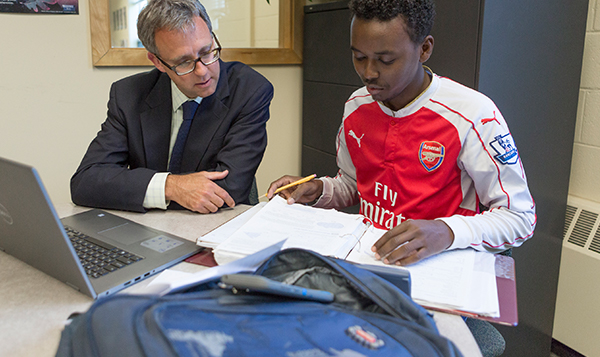
I’d like to introduce Jaden Kyung-Moon Bauch, a current student at MECA&D and my TA for the Money Matters course this past semester. Jaden is 21 years old, will graduate from MECA&D in May with a Bachelor of Fine Arts in Painting with a Minor in Art and Entrepreneurship, has passed both the Securities Industry Essentials Exam and the Series 65 (Uniform Investment Adviser Law Exam), and has already learned as much about personal finance as almost anyone I know.

What was the moment or turning point that got you interested in personal finance?

In my sophomore year at MECA&D, I had to get a root canal, and I didn’t have dental insurance. The procedure cost over $4,000, and I simply didn’t have that kind of money. I remember when my checking account balance was negative $500. At the same time, my student loan balance kept climbing higher and higher, and I couldn’t see a financially stable future for myself after graduation. I felt like choosing a creative career meant I was destined to have less financial success than others. But I decided I wasn’t going to accept that. That’s when I started self-studying personal finance, and I realized that financial literacy wasn’t just a tool for managing money—it was a tool for regaining my confidence and taking control of my future. That realization led me to want to help others, especially artists, understand and achieve their own financial goals.

How has your increased financial education affected your college experience?

Without a doubt, increasing my financial education has significantly improved my college experience. Not only did I gain a passion and a mission, but having greater financial literacy ultimately allowed me to spend less money, make more money, and do more with it.

I also think people—especially those my age—underestimate how much financial stress weighs on their subconscious. Even if you’re not actively thinking about money, it still takes up space in your brain. But when you take control of your finances, gain confidence in your financial situation, and understand how money supports your life, a huge weight lifts off your shoulders—one you may not have even realized was there.

What are some financial challenges unique to working artists?

The biggest hurdle for artists isn’t just financial logistics such as accounting and retirement—it’s overcoming the starving artist narrative.

When you tell someone you want to be an artist, their first thought usually isn’t that you’ll be financially successful—they might even try to talk you out of it. Somewhere along the way, choosing a career in art became synonymous with choosing financial insecurity.

This mindset is incredibly discouraging. If all you ever hear is that you’re going to struggle or fail, it becomes that much harder to succeed. The starving artist narrative actively holds creative people back—not just from pursuing their financial goals, but sometimes from pursuing a creative career altogether. All too often, the stories that get amplified are those of artists who only found success after their death, artists who ended up homeless, or art school graduates who stopped making art entirely a decade later. 

Have you had the chance at MECA&D to pass on some of what you’ve learned?

Yes! I’ve had many opportunities to do so. One example was, of course, in Money Matters, where I was able to cover certain classes and contribute support in areas where I had a specialized knowledge base. I also had the opportunity to speak to the Fine Art seniors— those in sculpture, painting, photography, and printmaking— focusing on budgeting, credit, and investing.

On another occasion, I gave a lecture to the entire freshman class about personal finance for artists. Most recently, my senior thesis focuses on equipping artists with the financial tools they need to thrive. As part of my thesis, I offer free financial coaching to artists and creative professionals, using those coaching sessions as inspiration for my paintings.

I also operate a resource on Instagram called The Financial Palette, which focuses on bite-sized finance and business tips for young creatives. My goal this year is to elevate this to the next level and expand beyond Instagram.

While working with you last semester, I noticed that your views on money and investing are “old school”. I think that’s a good thing. How did someone from your generation connect with those values?

It’s probably natural to develop those kinds of values when most of the finance books I’m reading are written by people four times my age—haha. I suppose you’re right, some of my beliefs are a bit old-school. I tend to favor simple strategies like passive investing and the three-fund portfolio. I also try to avoid finance discussions on social media unless they’re coming from qualified financial professionals because there’s a lot of misinformation out there, particularly around investing. So many people are just trying to sell day trading courses.

When it comes to investing and personal finance, you should stay with the times, but I don’t think you need to reinvent the wheel. Yes, you can be creative and tailor strategies to fit your unique situation, but that’s completely different from using approaches that have no quantitative backing.

I try to approach discussions about finance with those in my age group from a “modern” perspective because things are so different now compared to when our parents were our age. I focus more on mindset and developing strong financial habits—because I believe that’s the foundation of financial success, whatever that may look like for you.

What are your career goals?

Some people think I’m dreaming, but I have an elaborate plan for my career.

Within the next 2 years, I hope to complete the education requirements, pass the Certified Financial Planner (CFP) exam, and gain the necessary hours to earn my certification. From there, I’d like to spend three to five years working in the industry, gaining experience and expertise.

After that, my goal is to start my own financial services firm dedicated to serving creative professionals. I want it to go beyond just financial planning because there are so many other areas—like financial coaching, business planning, and tax preparation—that play a crucial role in a holistic financial strategy.

How do you see your art fitting into your professional life after college?

This question comes at a great time, as it’s something I’ve been thinking about a lot while navigating my thesis. I see art remaining a significant part of my life. I’ll continue attending gallery openings and staying engaged with the art world. However, when it comes to my own studio practice, I’m not entirely sure what that will look like long term.

There may come a time when I must choose between pursuing my dream of owning a financial services firm and being a practicing painter. While I love painting, I believe I can provide more value to the creative community through my financial expertise. However, in many ways, my art serves as a gateway to conversations about my mission. I especially enjoy projects where I can sell my work and use the proceeds to support artists.

Top personal finance advice for your generation?

1. Invest in yourself more than the average person.

2. Ultimately, your ability to be financially successful isn’t determined by your age, gender, race, career, or socioeconomic status—it’s determined by you.


Like I said, “Kids these days… are awesome.” Thank you, Jaden.
“Out of college, money spent.
See no future, pay no rent.
All the money’s gone, nowhere to go.”

-The Beatles

Most of the ideas for these posts come from my personal experience with money or from my experiences teaching personal finance. However, inspiration for which topic to cover in a particular month sometimes comes from unexpected sources.

Over the Thanksgiving holiday weekend, I attended a concert – the 22nd Annual Beatles Night concert – delivered by Spencer and the Walrus. (For Beatles fans who have not seen one of these shows… Make plans for Thanksgiving weekend 2025 and the 23rd iteration. It’s a truly incredible experience. I think I’ve been to 15 of the 22 shows.)

I take you to a moment in the concert when the band invited a nine-year-old boy to play drums for “While My Guitar Gently Weeps.” After the song, the crowd went wild. He came to the front of the stage and bowed, drumsticks in hand. HE NAILED IT!

The boy is the son of the band’s drummer, and as he took his bow, his dad climbed back into the seat behind his kit and wiped the happy tears rolling down his face. This was followed by the others in the band (especially the guys) drying their eyes. And if that wasn’t enough, a few songs later the drummer’s young daughter led the theatre in singing “Yellow Submarine.” Are you kidding me?! It was perfect.

And the cobbler’s children have no shoes

After both of those kids made their dad proud, I looked to my 12-year-old son and said, “You should know that I get emotional any time you say that you are going to save your birthday money rather than buy something.” He laughed ‘cause he knows it’s true.

All joking aside, that moment made me think about what I have passed on to my kid from my profession.

It’s a big conversation, but right now I’ll focus on the part related to that old Spanish proverb about the cobbler. I teach personal finance, but I often wonder if I am teaching my boy enough about money. No matter what we do for a living, we all have had to learn how to manage our finances in a uniquely complicated and unforgiving system. How can we prepare our children to survive and thrive?

While some students in Maine are benefiting from school-based financial education, it is still not available to all. See the end of this post for an update on efforts to guarantee financial education basics for all Maine high school students.

“Children are great imitators. So give them something great to imitate.” —Unknown

There once was a man named Aristotle, who had a lot of things to say about … (darn it, nothing relevant rhymes with Aristotle). Well, he had a lot of things to say about a lot of things, including raising children. He felt that children learn best through imitation. Hmm… that sounds a lot like observing role models, learning by example, etc.

“Parents are the primary influence on a child’s future financial well-being because they have many occasions to communicate information, set powerful examples, and involve children in activities that teach them financial skills. Parental involvement in their children’s financial education has long lasting effects.” – Federal Deposit Insurance Corporation

I’ll add, for whatever it’s worth, that in my now decades of studying and teaching personal finance, I’ve seen no greater influence on kid’s attitudes toward money than what they have learned at home, mostly through watching and listening. And yes, that can be a good thing. But it’s too often not as we adults don’t always exhibit strong and responsible financial behavior. I can only imagine what messages I would have sent if I had children when I was, eh, struggling with my financial decision making.

And even though I think my son is learning positive money lessons through a bit of household osmosis, I know it’s not enough. I must take more proactive, age-appropriate actions to teach him how things work in the U$A. Some of these are done, some in progress, some are coming soon:

  • Opening a bank account
  • Paying him, if necessary, to read my blog. Hey, that gives me an idea…
  • Piggy bank at home
  • Looking at the bank account and explaining interest
  • Talking about how much of that birthday money to save
  • Opening a 529 savings account, making contributions, putting part of his money into the account, showing him how the money has grown, and having regular chats about the costs and benefits of education
  • Explaining debit and credit cards while checking out at the grocery store
  • Explaining unit price at the grocery store
  • Explaining the stock market and letting him manage $100 in an online account
  • Taking part in an online course with an essay contest
  • Asking his school if they are offering any opportunities for personal finance or economics through class topics, or clubs, guest speakers (like me!), etc.
  • Encouraging questions and curiosity about all things money, economics or finance
  • Desperate attempts to make opportunity cost seem relevant

Resources, resources, resources

I am a personal finance educator and amateur economist, and I still often find myself saying, “I don’t know how to do that or where to find out.” So, where can we go for help? It’s a long list (of FREE stuff), but don’t try to grab it all at once. Pick one and explore a little at a time. You will find something that works for you and your kid(s). If not, please reach out to me, and I’ll help you dig for something that does work.

  • FAME – financial wellness for our kids
  • Claim Your Future – FAME’s career and budgeting activity, online version available to everyone, and a classroom kit for teachers & counselors
  • iGrad – short courses, articles, videos, and more for high school and college students
  • FDIC – teaching children about money
  • CFPB – Money as You Grow
  • Federal Reserve Bank of St/ Louis – for teachers, a treasure of searchable personal finance and economics lessons and activities
  • Next Gen Personal Finance – for middle and high school teachers, complete curricula for personal finance with lessons, activities, and games
  • And I (all of us at FAME) like visiting schools in person or virtually, so please don’t hesitate to ask or connect me with someone at your area school to see what personal finance resources we can bring to the classroom.

Update: Maine and Personal Finance Education

I appreciate this forum and the chance to talk about personal finance and lobby for all Maine students to receive financial education. However, I am even more appreciative of the folks who are actively working behind the scenes to make that happen.

Here is the latest from Samantha Drost, Vice President and Conference Coordinator of the Maine Jump$tart Coalition for Personal Financial Education, and Consumer Economics and History teacher at Caribou HS.

“Our second round of presenting the MLR social studies standards to the Education Committee is underway, and the public comment period has now closed. Maine Jump$tart proudly served as a stakeholder on the Overview Team, where we proposed enhanced personal finance standards that we believe will make a significant impact. If approved, the updated MLR social studies standards will align with the six main overarching standard topics set by the National Jump$tart Coalition for Personal Finance Education. The formal review process by the committee is scheduled to begin in January, with a decision hopefully expected by May. Maine Jump$tart remains hopeful and continues to advocate for comprehensive personal finance education for students from kindergarten through high school.”

The following sounds like one big, loud, and proud advertisement for Maine Jump$tart and the educators who are bringing personal finance education to Maine students.

It is.

They are among Maine’s many financial education champions and heroes, and they are making a difference.

Way Back to May 7, 2010 – Augusta Civic Center

This day marked THE turning point for me as a personal finance teacher. It was also a big day for The Maine Jump$tart Coalition for Personal Financial Literacy.

It was the group’s first Annual Fostering Financial Education in Maine Schools Conference, and it inspired and empowered me to take my efforts in teaching personal finance to another level. Fast forward 15 years to May 17, 2024, and Maine Jump$tart will be putting on the 15th iteration of this annual event. Along the way, these trainings have reached hundreds of Maine teachers and community educators who have taught and influenced thousands of Maine students.

Jump$tart Me Up

Prior to this event, I had already converted two math electives at my school into a fall offering called, “Business and Finance”, and a spring course, “Personal Finance”. I covered key economics topics and banking in the fall; balancing checkbooks, insurance, credit score, etc. in the spring. Somewhere around eight to ten seniors (out of a class of 60) were taking the elective. (Enrollment would triple in just a few years.)

Then, at the May 7th event in 2010, this happened:

  • I heard former Governor Angus King speak about the importance of financial education.
  • I learned about SIFMA’s Stock Market Game.
  • I met folks from The Federal Reserve Bank of Boston.
  • I learned about and eventually attended a unique teacher training event at The New York Stock Exchange.
  • I spoke with other educators from around Maine and heard about what they were doing in the classroom.

I drank from the fire hose, and it was wonderfully overwhelming!

I went back to the classroom and for the rest of the summer, I chipped away at revamping my courses. Here is just a sample of what I added for the following school year:

  • The Stock Market Game
  • A several-week-long budgeting spreadsheet exercise
  • A unit on credit score
  • Increased focus on how the Federal Reserve’s role in the banking system affects consumers
  • Games, web tools, and lesson plans
  • I worked with students to start a Finance Club and to form a team for the Boston Federal

And that was all just from the first year of attending the conference. I’ve attended almost every conference since, helped to plan and deliver a few, and along the way, I learned about FAME. And yes, that has turned out to be a big deal for me.

The Maine Jump$tart Coalition for Personal Financial Literacy was founded in 2008 as an affiliate of the National Jump$tart Coalition, with a mission “to improve the financial knowledge of Maine citizens, with a special focus on pre-K through college-aged students, including adult learners.”

4 Caitlyn Roy J
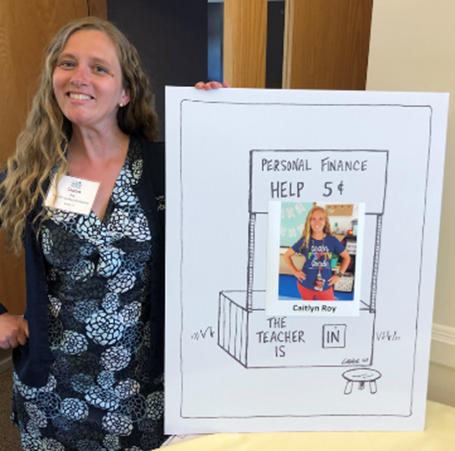
Caitlyn Roy, 5th grade teacher at Rose M. Gaffney Elementary School in Machias and Maine Jump$tart’s 2021-2022 Financial Educator of the Year

Since its founding, Maine Jump$tart has delivered more than 20 training events for teachers and other professionals working in areas connected to community financial well-being including guidance counselors, social workers, financial aid officers, and school administrators. Another key initiative from Maine Jump$tart has been the Financial Educator of the Year Award, first awarded in 2012. Thanks to many sponsors and volunteers, all these events have been provided at no cost for Maine teachers.

Last month I introduced this blog with the fact that Maine students are not required to take a personal finance course to graduate high school. I also mentioned that despite that truth, personal finance education is happening in Maine, and a significant amount of it has been influenced, inspired, and even created thanks to the outreach of Maine Jump$tart and every conference attendee since 2009.

They are doing this even when the state doesn’t require it, even when it’s hard for schools to find time in the curriculum. They are doing this mostly because they believe in it and because their students and their families tell them it matters.

Maine Jump$tart permanently and positively changed my personal finance teaching at one event in 2010, and in the years since I have tried to pass on that gift by serving on the board, delivering presentations, and listening to what others are doing in their classrooms.

It is indeed a coalition — one made of financial education heroes. Join us for this year’s event and take your program or your vision for a program to the next level.

P.S. Maine Jump$tart was awarded State Coalition of the Year by National Jump$tart for 2023. It is the SECOND time Maine has earned the honor with the other coming in 2013. Not too shabby.

My name is Steve Kautz, and I am a Financial Education Programs Specialist at the Finance Authority of Maine (FAME). I visit schools and businesses, deliver webinars, attend events, write, and try just about anything else I (or my boss and colleagues) can think of to promote financial wellness in Maine. Before starting with FAME in July 2023, I taught math, economics, and personal finance for 20 plus years, worked as a training coordinator for the Maine Jump$tart Coalition for Personal Financial Education, and served as a U.S. Peace Corps Volunteer in the Czech Republic ’95-’97.

Joining FAME has been a legitimate career milestone, not simply because it’s a great place to work, with a mission I share, but because it has allowed me the opportunity to join a committed agency and scale my efforts in financial education statewide. FAME’s myriad of resources and programs designed to improve the economic lives of Mainers through business growth and stability, education, and financial capability, enable me to do something I love and believe in every day.

Welcome to my blog and to Financial Literacy Month (yes, it’s a thing, every April).

On December 13, 2023, Pennsylvania became the 25th state to require a standalone personal finance course for high school students. One organization leading the charge is Next Gen Personal Finance (NGPF), and they use the phrase, “guarantees a standalone personal finance course” for high school students. Maine is not one of the 25 states to require or guarantee a standalone personal finance course for high school students. Recent attempts (in the form of LD 1284) at the Legislature to achieve this for Maine high school students have not been successful. 

So, for at least another legislative session or another year (likely more), FAME will keep advocating for Maine’s high school students to have guaranteed access to personal finance education in some form before graduation. 

Randomly selected, but not randomly focused statistics:

  • 88% of American adults surveyed say that personal finance should be a high school graduation requirement (NEFE – National Endowment for Financial Education study, 2022)
  • 60% of US adults are living paycheck to paycheck (Lending Club Corporation, 2023)
  • $152,000 = the total cost of a four-year degree at a public university (Educationdata.org findings, which include lost income opportunity and interest on loans)
  • 18 = the official age when we ask someone to take on the above-mentioned financial decision
  • Credit score… yuck. We all know what it is, and the simple fact it exists and stays with us, like that old pair of shoes you just can’t get yourself to toss, should be enough to make financial education as integral a part of schooling as US history.

So, am I here to convince you that Maine needs to find a way to ensure equal access to financial education? Not really, because I know that, statistically speaking, I am preaching to the choir. 

However, there is a connection.

Right now, in Maine, there are already bunches of teachers teaching personal finance to even bigger bunches of students. This is happening through required classes, electives, seminars, clubs, and competitions. This is happening even though the state doesn’t require it. And behind these teachers there are more teachers and organizations providing training and curriculum support. This is happening because the adults in the room care about giving our kids – our state – a fighting chance out there in the American economic wilderness. 

This blog/newsletter/semi-organized-words-on-your-screen is about personal finance, money, and the need to talk about money. It’s just another small way of promoting financial education in any way I can, one person at a time if necessary, until Maine becomes the 26th state (and even then, I’ll still be fighting to deliver what we promise). 

Let’s Chat

I’m not an expert on building wealth, financial markets, or bond prices. What I am is someone who spent many years making financial mistakes and many more years working to overcome them. Along the way, I started telling my stories and teaching personal finance fundamentals – sometimes teaching what I was still learning myself. I am – I have become – an expert in taking my love for numbers, an understanding gained from my own money mistakes, and my keen eye for economics and turning them into a way to engage my community to navigate the opportunity-filled yet hazard-laden American financial system. 

I’m not here to deliver or teach the details, although I will provide resources to that end. I’m here to push the conversation about personal finance so that Maine’s youth, and ultimately all Mainers, benefit. I want to do this as if we were sitting around a table, coffee in hand, learning from each other.

I’ll tell my stories and offer thoughts on everything from interest to banking to credit cards and more. I’ll ask former students for their stories and how having had personal finance in high school has affected them. I’ll ask you to search for your experiences and get in touch with your own money story.

Join me for a few minutes a month?

Seville, Spain, sometime in 2018, English conversation class for college students. The topic: money.

“Credit score, credit bureaus… Oh boy, it’s tough to translate something that doesn’t exist in Spain. In fact, nearly all of Europe and most of the world do not use credit scores and don’t have centralized credit reporting agencies,” I told this class, as I had told many before, both in Spain and the Czech Republic.

“Can you explain it to us?” they asked.

“I’m not sure, but I will enjoy trying,” I replied, wondering if they had seen Fight Club

The American economic system is complicated (in casual conversations a stronger adjective is needed), and navigating our system when it comes to personal finance is complicated times ten. This is true in a vacuum and is especially obvious when compared to other countries. Yes, “land of opportunity” still rings true, and I say that after living abroad for 10 years and having taught students from more than a dozen countries. But the costs of that opportunity (sweet economics pun for anyone paying attention to such things) are the sometimes mile-high and spiky hoops we must jump through to get to, and maintain, those opportunities.

What makes it complicated? Hmm… Let me see if I can think of a few things: 

  • Credit scores 
  • The cost of higher education and student loans
  • Relatively easy access to credit
  • Predatory lending, check-cashing businesses, rent-to-own, etc.
  • Health care costs and access to affordable insurance
  • Social security
  • The national debt
  • The non-stop marketing machine that drives consumer society

Exhale. I realized I was holding my breath as I was typing. I further realized that I’d better stop there so as not to turn the whole blog into a list.

Oops, I can’t leave this one off the list: a lack of financial education to help face those challenges.

I can’t say these issues don’t exist in other countries. But I can say from personal experience and research that Nobody Does it Better than US, and “better” in this case is not always a good thing. Yet even with those challenges, America is still near the top of any list in terms of personal economic opportunity.

Has it always been so tough? In some ways it was certainly tougher on Americans before stronger labor laws, social security, banking regulations, and relative progress towards economic equality for all regardless of gender, race, or ethnicity. But some things have gotten worse, or are relatively new problems, such as easy access to credit and the consequences it brings. Statistics on credit card use and debt are easy to find and understand, but not easy to put into perspective. One thing is clear: in 1970, less than 50% of Americans had a credit card, and now it’s over 90%. Yes, convenience and technology are a part of that, and some of the side effects of credit card use are objectively good (safety compared to cash, cross-marketing benefits, etc.).

All Together Now

The connection to the complicated American financial system is that when it’s so easy to get credit, it’s so easy to misuse it, pile up debt, and make a real financial mess. Yet, as a nation, we allow our 18-year-olds into this system without the educational foundation (a shield) to understand and protect against the double-edged sword of compound interest. 

The generations responsible for allowing financial education to be largely ignored have an excuse; it wasn’t that long ago that credit cards were not easily available, people got jobs that they kept for 30 or 40 years which provided health care and pensions, a college degree was not in as high demand or as expensive (adjusted for inflation), there were no 72-month, $40,000 car loans, and our life expectancy was not a decade or more longer than our career expectancy.

It’s no one’s fault that it’s so tough out there. Our society and its unprecedented economic experiment have evolved, and there is plenty of good in that evolution. It will be everyone’s fault, however, if we don’t catch up and better prepare our new adults to step into the financial funhouse that we call American capitalism.

So, I ask myself again today, “What can I do to help one student, one class, one person, not only survive our system but learn to thrive in it?” Won’t you join me?