




Why Did I Buy That? Was it FOMO or the Joneses? Exploring Money Decisions
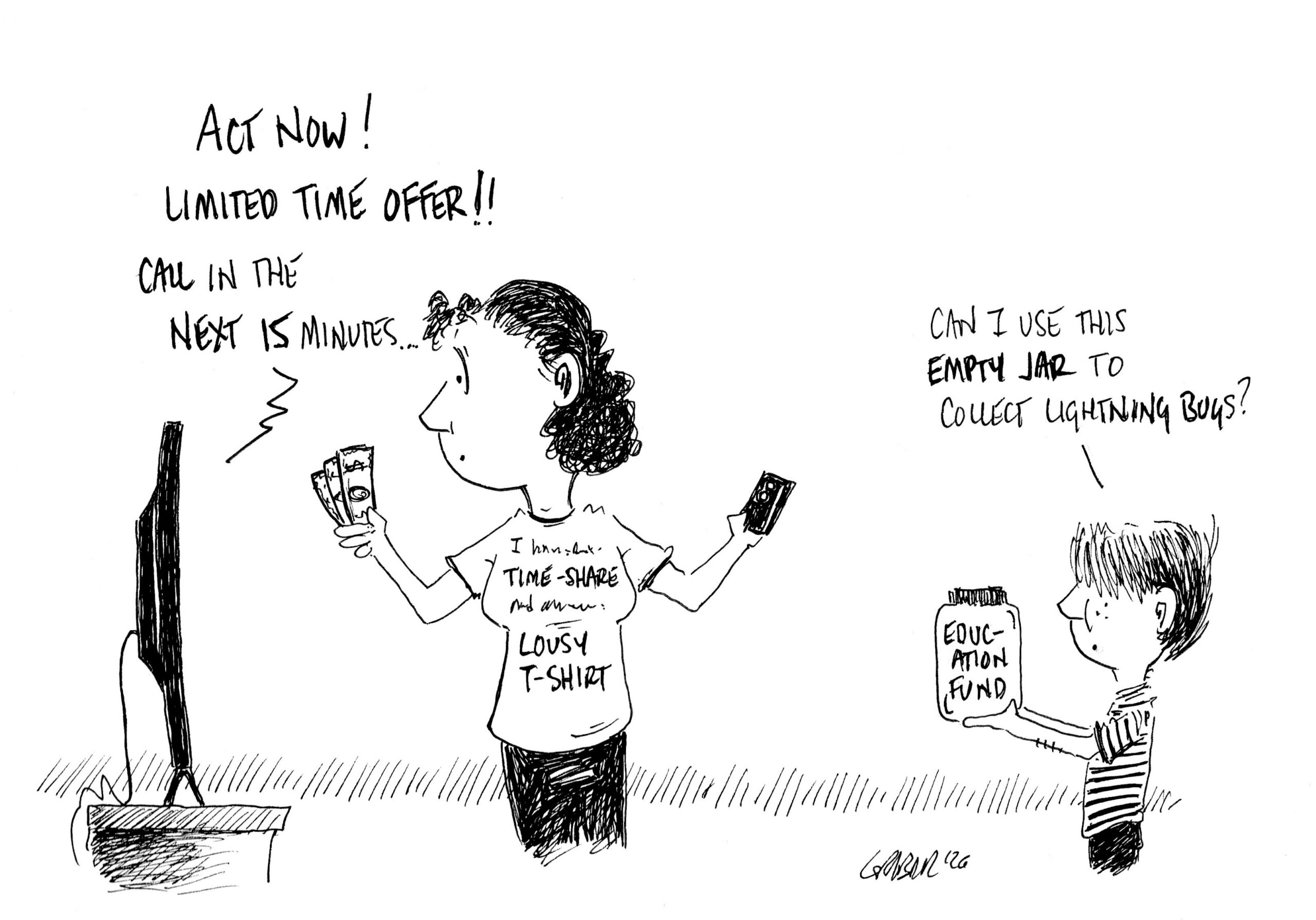
What goes into our money decision recipe? Take our experiences, add a little know-how, sprinkle in some goals and season with some FOMO. What role does FOMO play in our finances? Can FOMO actually help with our financial wellness?
December 12, 1980: Apple stock offered in an initial public offering at $22 per share. That means that $1000 invested at that time would be worth over $2 million today. An equivalent investment in the S&P 500 would be worth about $220,000 today. Buying Apple then and holding it would have been about 10 times more powerful than a broad stock market investment.
I did not buy Apple in 1980 or 1985, or 1990. That is partially because I was too young to do so in 1980 and in subsequent years I was busy losing money on a more daily basis through unwise credit card and automobile decisions.
Many similar opportunities can be cited, such as Bitcoin and Amazon, and no, I did not get in on those either. Over the years there have been moments when I thought about what I missed, but then I think of Groupon, and Pets.com, and Bitcoin as it matured. I missed out on those, too, but it also means I missed out on some big losses.
When it comes to these examples, FOMO (fear of missing out) is often at the center of the conversation, but these investing situations are not the only time when FOMO influences our money decisions, and it’s not the only psychological factor in play.
Remember the Joneses?
FOMO, as a common acronym, is thought to have started somewhere in the early 2000s, but before that came along I most associated unwise money decisions with, “Keeping up with the Joneses” – the idea that we might make financial decisions based on doing what others do or having what they have so that we do not get left behind. That classic idiom was born in a 1913 comic strip by Arthur Momand, so it seems that humans have been concerned about their neighbors’ possessions for at least 100 years (snicker, snicker … we know it’s been going on for a lot longer than that).
The Joneses and FOMO are not alone, however, when it comes to influences on our financial decisions. The longer I teach, coach, and learn personal finance, the more I focus on psychological factors – our money stories. Digging deeply into how our past shaped our money mindset and how that mindset is connected to how we’ve managed our finances is complicated and can require, at the least, financial counseling, if not more in-depth financial therapy (see the resources for the article on creating a balanced relationship with money).
I’m Happy to Share
When I was going through my big fat personal finance reboot, I did not really look to the past for answers. I needed to focus on the here and now and change my behavior in order to get different results immediately. Over the years, both for myself and as a teacher and counselor, I have thought more about my money mindset, FOMO, the paperboy years, and other factors that have and continue to influence my financial path.
Students often ask me if I feel bad about not buying Apple or Bitcoin, and the honest answer is no. It’s not that I have never experienced FOMO, but given my risk profile, I’m not one to jump at those types of temptations and don’t regret “missing out”. I did give in elsewhere, however. The new car when I didn’t need one and the sixth or seventh credit card in the wallet were perhaps my version of Keeping up with the Joneses.
I Do Get FOMO, But in a Different Way
My avoidance of FOMO-related mistakes is not just because of my risk profile, but also because of a foundational understanding of investing and a nurtured belief that there are no hacks or easy paths to financial success and financial well-being. Yes, someone might hit a home run on a given stock, but for every one of those homeruns there are many, many more strikeouts. According to research gathered and summarized by Yahoo Finance, the ratio of big winning stocks to losing stocks is about 1 to 24. Yikes. I’ve learned that steady habits need to be applied to all things surrounding money – budgeting, savings, investing, credit score, etc.
Fighting FOMO
Short of financial therapy, here are some tips that might help:
- Knowledge is power. Learn as much as you can about the thing that tempts you.
- Does an opportunity align with your goals and values?
- Delay a purchase, give yourself time. Metaphorically (and maybe in reality) walk around the store for a while with that purchase in your basket before going to the cash register.
- Dig into your money mindset, your “why” for making financial decisions.
- Think about whether it’s really FOMO or the Joneses or something else pushing you.
- Try FAME’s free Money Personality Assessment on the Enrich platform.
- Talk to a financial counselor or therapist.
FOMO still finds me in the form of missing opportunities to do something today that will help me (and my family) tomorrow. That translates into regular budget reviews, looking for areas that can be adjusted in order to direct resources toward saving for education, retirement, the next car, vacations, and anything else where cash needs to be king and debt is best avoided.
And then there is my fear of giving in to FOMO driven fear. I call it my FOFOMO. And that’s a topic for a different post.
About the Author:
Steve has worked on financial literacy efforts in Maine since 2004, and in July 2023 he started at FAME as a Financial Education Programs Specialist. He is an Accredited Financial Counselor (AFC®), a WISE-Certified Personal Finance Educator, has a B.S. in economics from Southern Connecticut State University, an MBA from the University of Hartford, and served as a U.S. Peace Corps Volunteer.
In the fall of 2003, he started a 20-year connection to the Waynflete School in Portland, where he taught math and personal finance, advised middle and upper school students, and coached baseball. Steve worked with students to create the Finance Club and an award-winning LifeSmarts team (Nationals 2013, 2014, and 2015). In 2011, Steve coached a Waynflete team to victory in the Boston Federal Reserve Economics Cup Challenge.
Steve was named Maine Jump$tart Financial Educator of the Year for 2012, was the keynote speaker at the Maine Jump$tart Annual Teacher Conferences in 2015 and 2023, and was Maine Jump$tart’s training coordinator from 2017 to 2023.
Steve and his family moved to Seville, Spain in July 2016 where he taught English and business English and learned many new personal finance lessons. He now lives in Portland with his wife and their son.